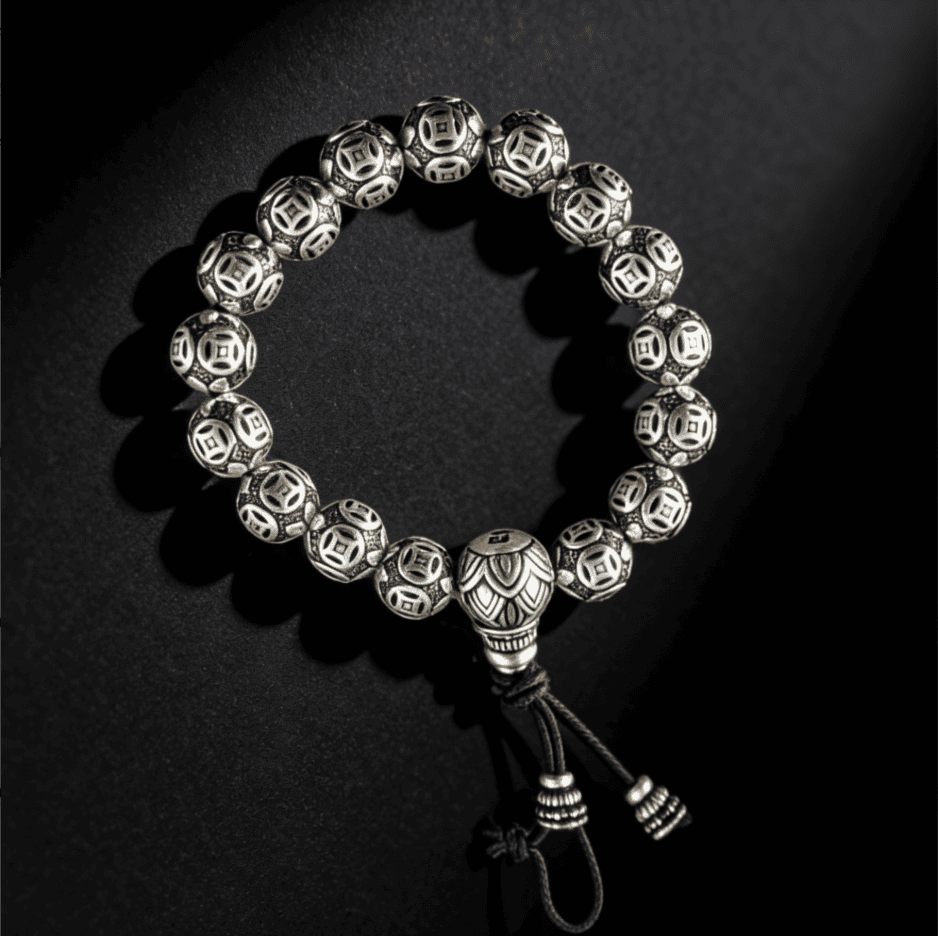
If a silver ring, bracelet or necklace leaves a green, grey or black mark on your skin, there is usually no reason to assume that something is wrong with the jewellery.
Green and black marks usually have different causes.
Green staining is commonly associated with copper in a silver alloy. Sterling silver (S925) contains at least 92.5% silver, with the remainder typically made up largely of copper and other alloying metals. Copper can react with moisture, salts and other substances on the skin, producing compounds that may appear green and transfer to the skin through contact and friction.
Grey or black marks are usually related to silver tarnish. Silver reacts with compounds in the surrounding environment, particularly sulphur-containing compounds, forming a darker surface layer. During wear, some of this material can transfer onto the skin.
So:
Green does not automatically mean fake silver, and black does not automatically mean fake silver.
In many cases, these marks are simply the result of ordinary chemistry between the jewellery, the skin and the surrounding environment.
Why fine silver behaves differently
This is one reason many Chinese silver jewellery pieces are made from S999 fine silver rather than sterling silver.
Fine silver is approximately 99.9% silver and contains very little alloying metal. As a result, it is less likely to produce the copper-related green staining commonly associated with sterling silver.
That does not mean fine silver can never leave marks.
Silver itself can still tarnish. When exposed to sulphur-containing compounds and other substances in the environment, the surface can gradually become darker.
The important distinction is that tarnish is primarily a surface change on the jewellery. It can usually be reduced or removed with appropriate cleaning and polishing; it is not the same thing as permanently staining the skin.
What makes it worse?
The same piece can leave a mark on one person and not another. It can also behave differently on the same person in summer and winter.
Several factors can affect the result:
- Sweat. Heat, exercise and humidity increase moisture on the skin and can make reactions and transfer more noticeable.
- Skin environment. The chemistry of sweat and the skin surface varies from person to person, which is one reason the same piece may behave differently on different people.
- Cosmetics and skincare. Sunscreen, moisturiser, makeup, perfume and hairspray can leave residues on metal. Combined with sweat and friction, these residues can make staining or tarnishing more noticeable.
- Swimming pools and seawater. Chlorinated water and salt water can accelerate tarnishing, corrosion or surface damage, especially with prolonged exposure.
- Household chemicals. Bleach and some cleaning products can react strongly with silver and should be kept away from jewellery.
- Friction. Rings and bangles that constantly rub against the skin are more likely to transfer surface tarnish or other residues.
For this reason, a mark on the skin alone is not a reliable test of silver quality.
Is it an allergy?
Usually not.
A green, grey or black mark by itself is generally more consistent with surface chemistry or friction than with an allergic reaction.
Jewellery-related skin reactions are more commonly associated with metals such as nickel, although irritation can also be caused by sweat, friction, soap, water and other substances rather than by a true allergy. DermNet: Jewellery allergy
The distinction is fairly simple:
Ordinary staining:
A green, grey or black mark appears on the skin, usually without persistent itching, swelling or a rash, and can generally be washed away.
Possible skin reaction:
Persistent redness, itching, swelling, peeling, blisters or a rash — particularly if it continues after the jewellery has been removed — should not simply be dismissed as tarnishing.
If this happens, stop wearing the jewellery and speak with a doctor or pharmacist. Repeated reactions may require professional testing to identify the specific cause.
A purity mark such as S925 or S999 can provide useful information about the silver content, but a stamp alone should not be treated as proof that a piece contains absolutely no other metal.
How to reduce staining
1. Put jewellery on last
Apply perfume, sunscreen, moisturiser and other personal-care products first. Allow them to dry or absorb before putting on your jewellery.
At the end of the day, remove the jewellery before applying skincare products.
2. Take it off before water and exercise
Remove silver jewellery before showering, swimming, washing dishes or exercising.
Chlorinated pool water, salt water and prolonged exposure to sweat can all accelerate surface changes.
3. Keep it dry
After wearing a piece, gently wipe it with a soft cloth to remove moisture, sweat and surface residue.
Keeping the surface dry helps slow tarnishing.
4. Clean it regularly
A heavily tarnished surface is more likely to transfer dark residue during wear.
For plain silver jewellery without enamel, antiquing or other special finishes, a soft silver polishing cloth is usually sufficient for routine care.
5. Clean the skin underneath
Rings and bangles can trap sweat, soap and skincare products against the skin.
If the area becomes damp or dirty, wash and dry the skin properly before putting the jewellery back on.
6. Store it properly
When you are not wearing silver jewellery, keep it in a dry, enclosed environment. An anti-tarnish pouch or jewellery bag can help slow down tarnishing.
Avoid prolonged contact with materials that may release sulphur-containing compounds, including some rubber products, wool and certain papers or cardboard.
What about a clear protective coating?
A clear coating can temporarily reduce direct contact between the metal and the skin, but it is not an ideal long-term solution.
Coatings wear away through friction, cleaning and everyday use, often unevenly. Once the coating begins to wear, protection becomes inconsistent.
If a particular alloy repeatedly causes a skin reaction, choosing a piece with clearly identified materials is a better long-term approach than relying on a temporary coating.
If you experience persistent redness, itching or a rash, do not simply cover the jewellery and continue wearing it. First find out what is causing the reaction.
How to remove the marks
Green, grey or black marks on the skin can usually be removed with ordinary soap and water.
If a mark is stubborn, gently wash the area again with a soft cloth. There is normally no need for harsh chemicals or aggressive scrubbing.
For the jewellery itself:
- Light tarnish: Use a soft silver polishing cloth.
- Sweat and residue: Use warm water with a small amount of mild dish soap, gently clean detailed areas with a soft brush, then dry thoroughly.
- Heavy tarnish on plain silver: Use a proper silver polish sparingly and follow its instructions.
- Antiqued, enamelled or specially finished pieces: Avoid chemical dipping solutions unless the manufacturer or a qualified jeweller confirms that they are safe.
Antiqued silver often has deliberately darkened recessed areas that are part of the design. Aggressive polishing or chemical cleaners can remove this finish.
Enamelled jewellery requires particular care because chemical cleaners and inappropriate cleaning methods may damage the enamel or its bond with the metal.
When the jewellery itself may be the problem
Sometimes the jewellery really is responsible.
Warning signs include:
- A strong reaction appears within a few hours even though you normally tolerate other silver jewellery.
- A worn area reveals a different-coloured metal underneath.
- Plating is visibly peeling or wearing through.
- The seller cannot provide clear information about the metal composition.
- A claimed silver piece has a missing or unclear purity mark and the material cannot be verified.
Plated jewellery can wear through at high-friction areas, exposing the base metal underneath. In some cases, that underlying metal — rather than the silver surface — is responsible for the skin reaction.
However, the absence of a purity mark alone does not prove that a piece is fake. Marking requirements vary between countries, regions and types of jewellery. If the material is advertised as fine or sterling silver, the best approach is to ask the seller for clear information about its composition and purity.
If you want to minimise copper-related green staining, fine silver can be a useful choice because it contains very little alloying metal.
HeriKraft’s silver collection identifies the silver material used in its pieces. For a closer explanation of S999, see our guide to what S999 means on silver jewellery.