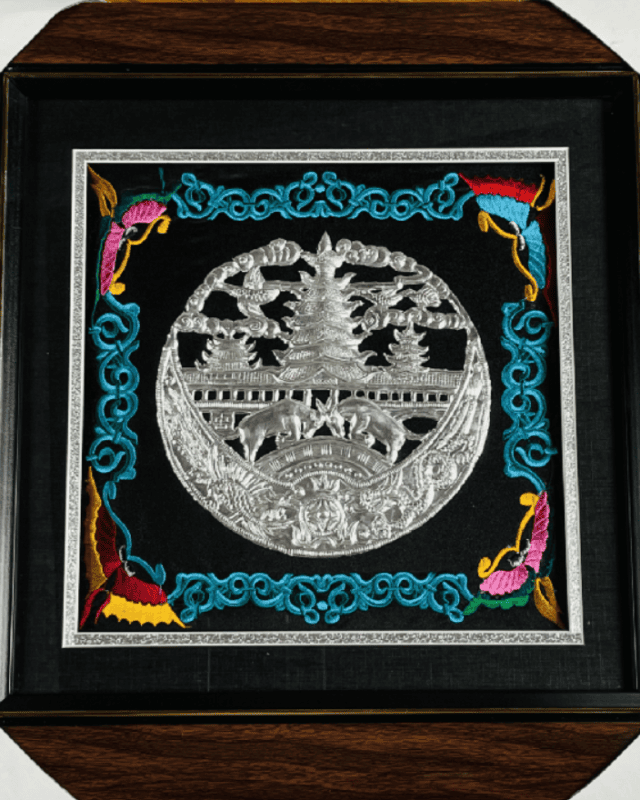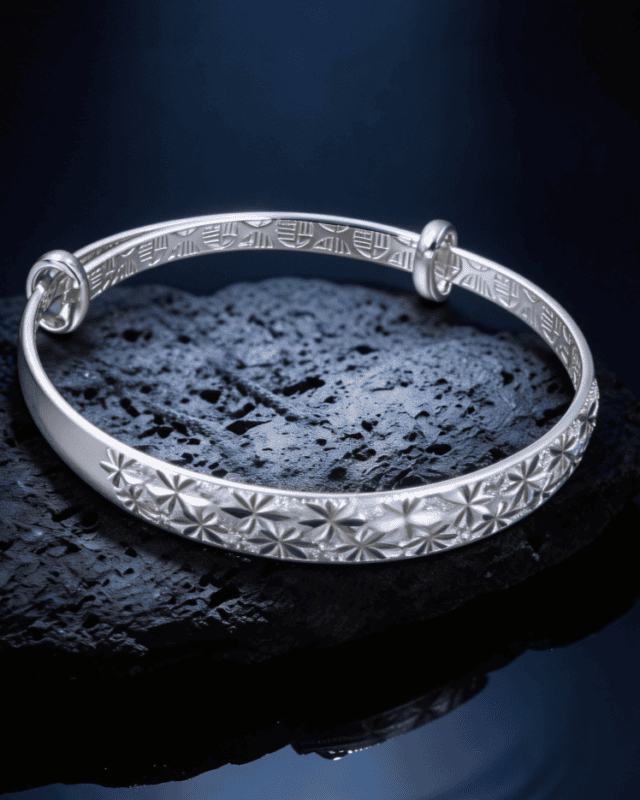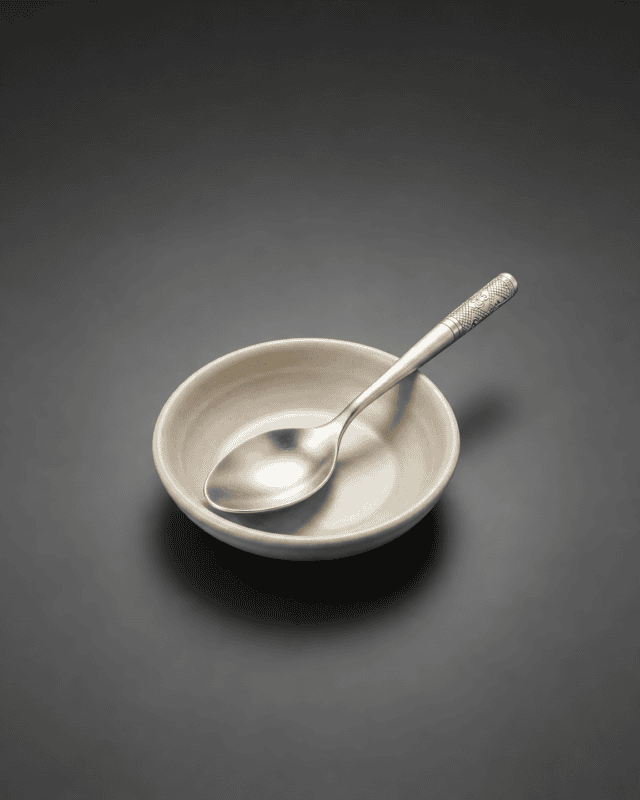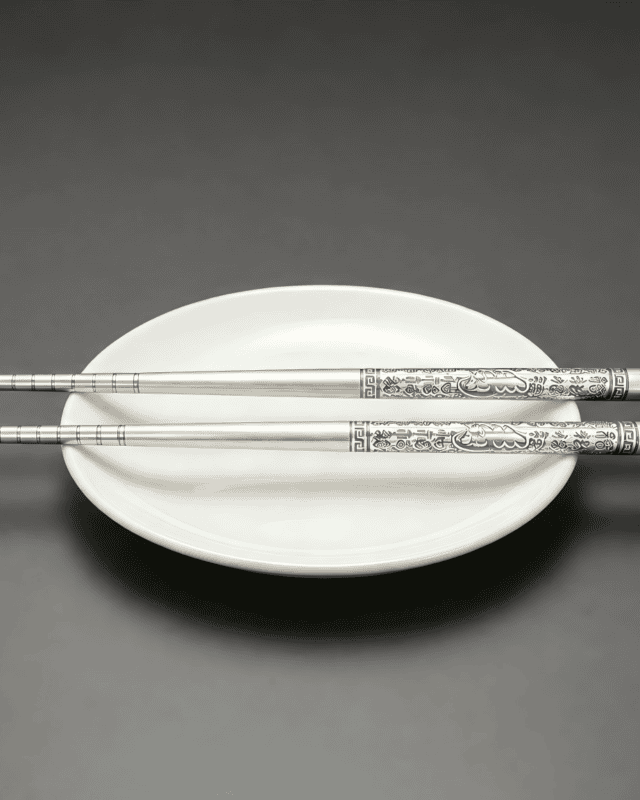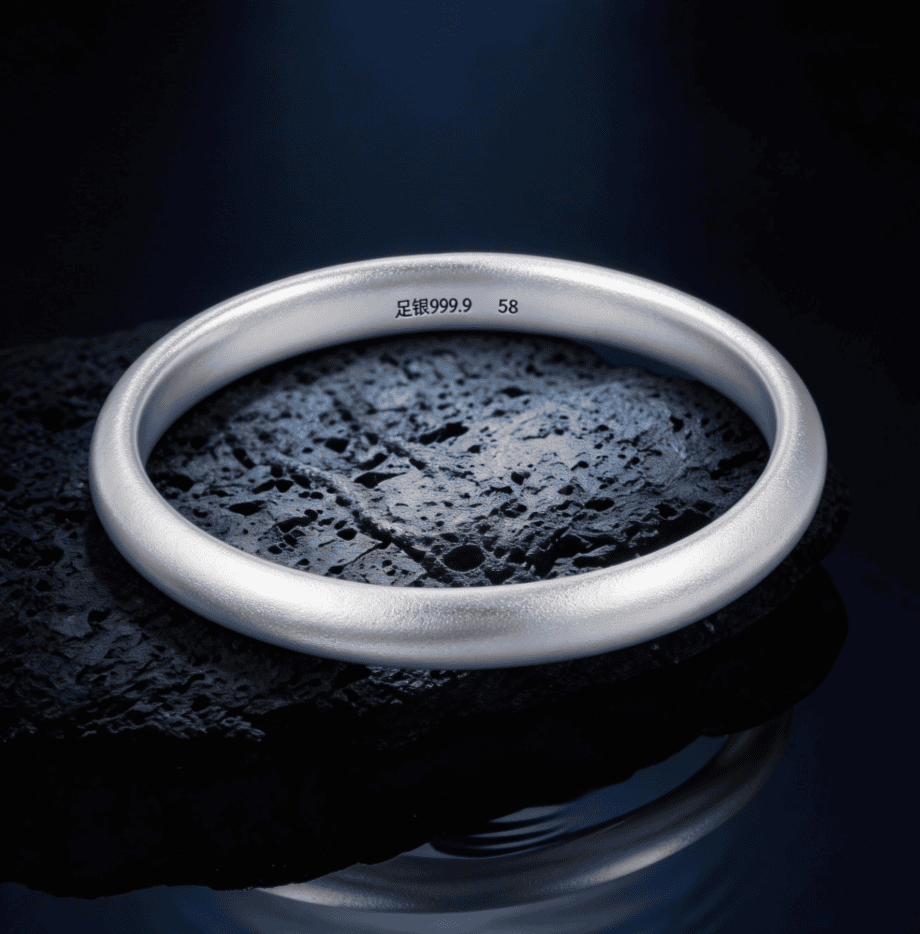
S999 means the piece is 99.9% pure silver — what the trade calls fine silver. You will often see it stamped in Chinese as 足银999, 足银999.9, or simply 999.
The number matters because it tells you the approximate silver content. Fine silver contains very little alloying metal, while S925 sterling silver contains about 92.5% silver, with the remaining portion usually made up of copper or other metals.
That difference affects how a piece looks, feels, wears, and how easily it can be shaped or repaired.
The marks you’ll actually see
- S999 / 足银999 — fine silver, approximately 99.9% silver. Common in traditional Chinese silver jewellery, including bangles, bracelets, and cultural or ceremonial pieces.
- S990 / 足银990 — approximately 99.0% silver. Slightly less pure than S999, but still considered high-purity silver.
- S925 / 银925 — sterling silver, approximately 92.5% silver with about 7.5% other metals, usually copper. Very common in modern jewellery.
- 银 / silver with no number — treat with caution. An unnumbered mark alone does not tell you the exact silver purity.
The stamp is usually found on an inside surface: the interior of a bangle, the back of a pendant, or another less visible area. On larger or handmade pieces, the mark may be difficult to see.
Why is S999 silver common in traditional Chinese jewellery?
Sterling silver became widely used in Western jewellery partly because its added alloying metals make it harder and more durable than pure silver. This makes it well suited to detailed settings, chains, clasps, and jewellery designed for frequent everyday wear.
In China, however, silver has also had a long history as a form of tangible wealth. Silver objects could carry material value as well as social and cultural meaning, and silver jewellery was sometimes passed down within families or given as gifts on important occasions.
This is particularly visible in traditional silver jewellery from different parts of China, including silver bangles, children’s jewellery, ceremonial pieces, and ethnic or regional silverwork. In these contexts, the value of the piece may come not only from its appearance, but also from its silver content, craftsmanship, symbolism, and the tradition behind it.
This helps explain why high-purity silver such as S999 or S990 remains important in parts of the Chinese silver market.
But this is a difference in tradition and market preference, not a strict East-versus-West rule. Modern Chinese jewellery also makes extensive use of S925 sterling silver, while fine silver is also used in jewellery and silverware in Western markets. The choice of purity usually depends on the design, manufacturing process, intended use, and consumer preference.
What fine silver does better
- It contains very little alloying metal. With 99.9% silver, S999 has much less copper than S925. This means it is less associated with copper-related surface corrosion or greenish copper compounds.
- It can have a clean, bright appearance. Fine silver can be polished to a high shine, including a mirror-like finish, when properly finished.
- It is highly malleable. Its softness makes it relatively easy for a skilled maker to shape and form.
- It is easy to recognize by its high silver content. A genuine S999 piece contains significantly more silver than S925.
One important point about tarnishing
S999 does not necessarily tarnish more slowly than S925.
Silver itself reacts with sulfur-containing compounds in the air, on skin, and in everyday products. This can gradually form silver sulfide, which appears as a dark or black surface layer.
Because S999 contains very little copper, it is less likely to develop copper-related green or bluish corrosion products. But that does not mean it is immune to dark tarnishing.
In some environments, fine silver can darken noticeably. How quickly this happens depends on factors such as humidity, exposure to sulfur compounds, cosmetics, perspiration, and storage conditions.
So if your S999 jewellery becomes darker over time, that does not necessarily mean the silver is fake or poor quality.
What fine silver does worse
Purity comes with a trade-off: fine silver is soft.
- It scratches and dents more easily. A fine silver bangle worn daily can pick up fine surface marks. Most owners come to like this; some do not.
- It bends more easily. Thin fine-silver pieces can deform if sat on, caught in a bag, or handled roughly.
- It may not hold very fine details as well as harder alloys. For intricate structures that need strong mechanical support, sterling silver or another alloy may be more suitable.
- A polished surface can lose its shine more easily through everyday wear. S999 can absolutely be polished to a mirror finish, but its softer surface is more easily scratched, so a high-gloss finish may not stay pristine for as long as it would on a harder alloy.
None of this makes fine silver “bad”. It simply means that S999 is better suited to some types of jewellery than others.
For a substantial bangle, a little softness can actually be part of the appeal. For a delicate chain, clasp, or highly detailed setting, a harder silver alloy may be more practical.
How to check a piece is what it claims
No home test is conclusive, but several things together give you a reasonable picture:
- Find the stamp. A genuine piece is normally marked with its purity. Look inside bangles and on the reverse of pendants, and expect the mark to be small, crisp, and slightly recessed.
- Try a magnet. Silver is not magnetic. If a piece is strongly attracted to a magnet, it is unlikely to be solid silver. However, passing a magnet test does not prove that a piece is silver.
- Weigh it in the hand. Silver is relatively dense. A piece that feels surprisingly light for its size may deserve closer inspection, although weight alone cannot determine purity.
- Look at wear points. On plated pieces, edges and high-contact areas may eventually show a different-coloured metal underneath. This is useful evidence, but it is not a complete test.
- Watch how it tarnishes. Real silver can darken over time, especially when exposed to sulfur-containing compounds. Tarnishing alone does not prove authenticity, but an unusual or inconsistent surface may be worth investigating.
For anything of significant value, a professional test is more reliable. Acid testing and electronic testing can provide additional evidence, while more advanced testing may be appropriate for valuable pieces.
Silver bars and weight-priced pieces
Some items — plain bars in particular — are priced by weight rather than as finished jewellery, which is why they appear with a price range rather than a single figure.
The purity mark is doing straightforward work: it tells you how much silver you are buying.
With jewellery, however, the price is not determined by silver weight alone. Craftsmanship, design, labour, finishing, cultural value, and brand or maker can all contribute to the final price.
Living with fine silver
Care is simple, and mostly about keeping the surface away from unnecessary wear:
- Put jewellery on after perfume, sunscreen, lotion and hairspray, and take it off before applying them when possible.
- Remove it for swimming, showering and the gym. Chlorine and salt water can affect silver surfaces, and sweat can accelerate tarnishing.
- Store it dry and closed — a small airtight bag or box can help reduce exposure to air and moisture.
- Keep it away from rubber bands, wool and cardboard, all of which can contribute to tarnishing under certain conditions.
- Clean it with a soft silver cloth. Avoid chemical dips for plain pieces unless you know the finish is suitable; aggressive cleaning can alter deliberately textured, oxidized, or antique-style surfaces.
If you want the character of the silver itself, S999 is a beautiful choice. The softness, gradual surface marks, and changes in finish can become part of the story of a piece over time.
Good to know
What does S999 mean on silver jewellery?
S999 means the piece is approximately 99.9% pure silver, commonly referred to as fine silver or 足银999 in China.
Is S999 better than sterling silver?
Not necessarily. S999 is purer and softer, while S925 is harder and generally more resistant to everyday wear. The better choice depends on the design and how you plan to wear it.
What is the difference between S999 and S925?
S999 contains approximately 99.9% silver, while S925 contains approximately 92.5% silver and about 7.5% other metals, usually copper. This difference affects hardness, workability, durability and surface behaviour.