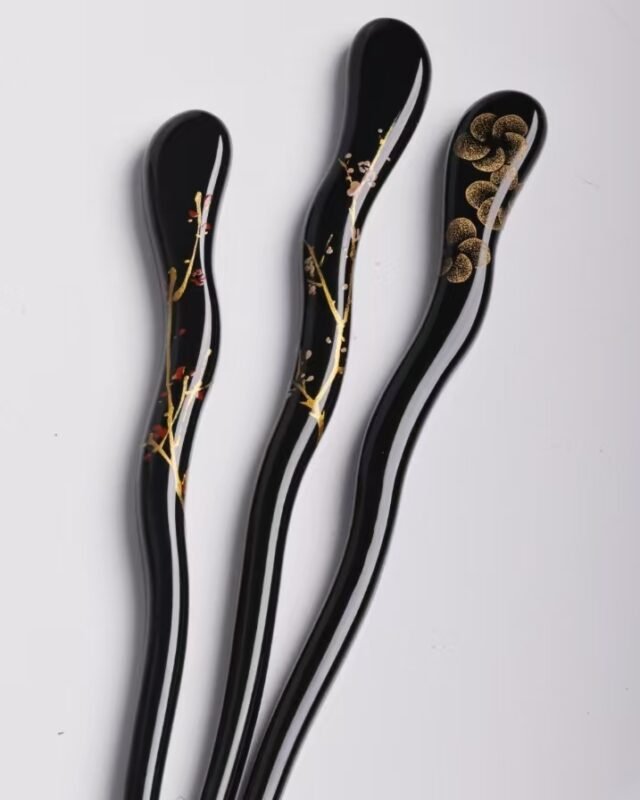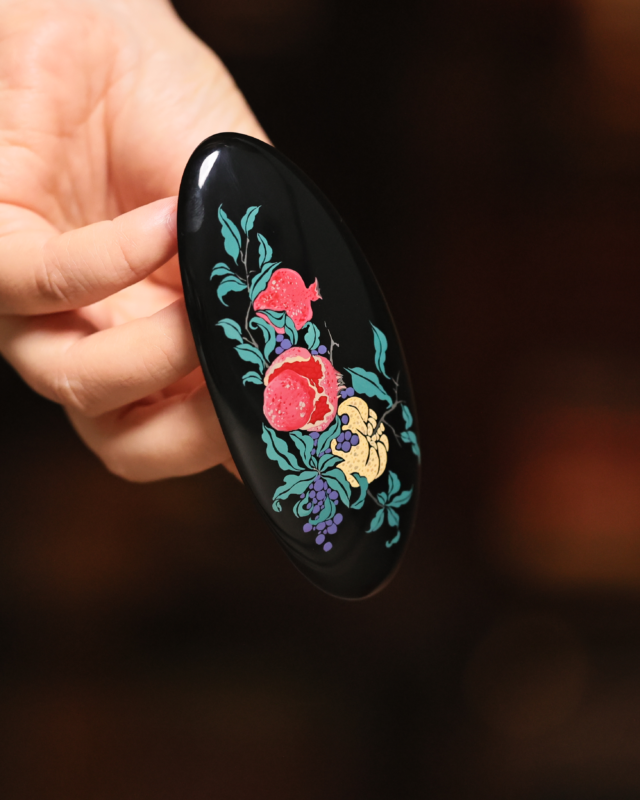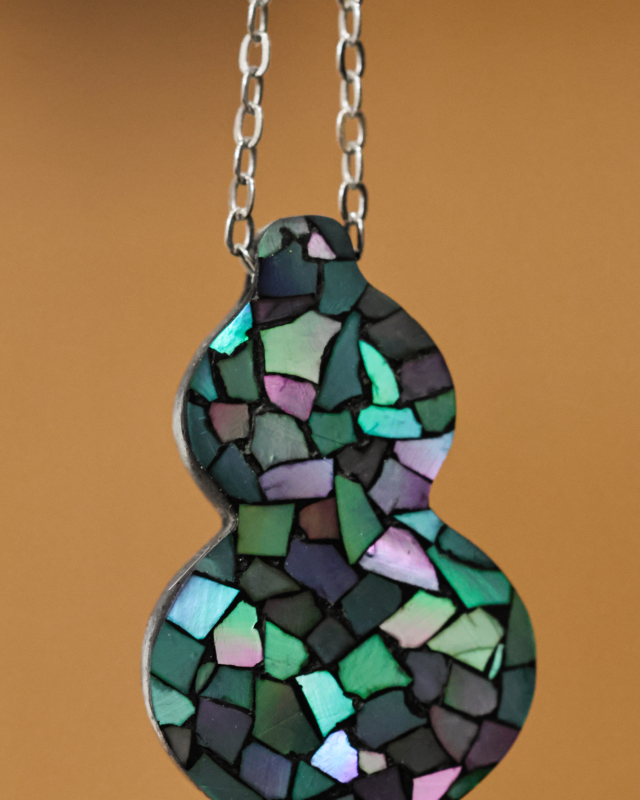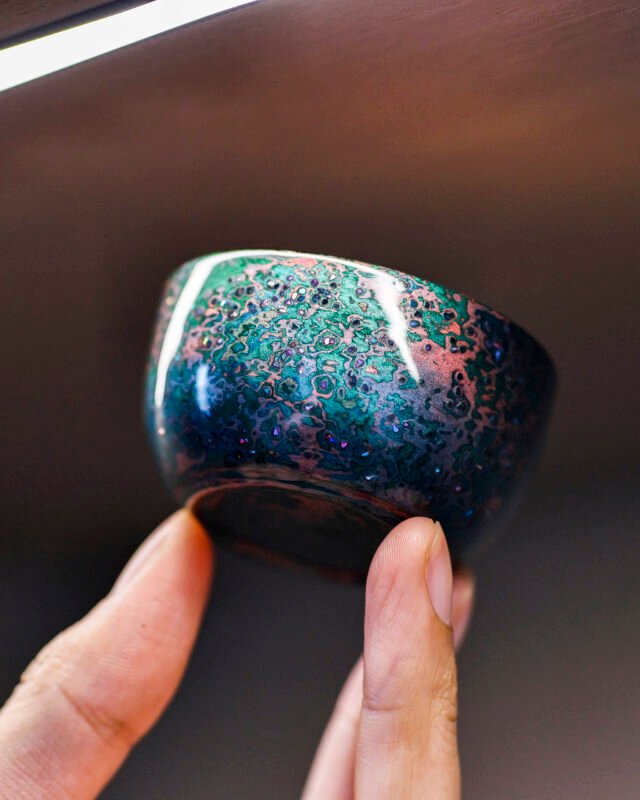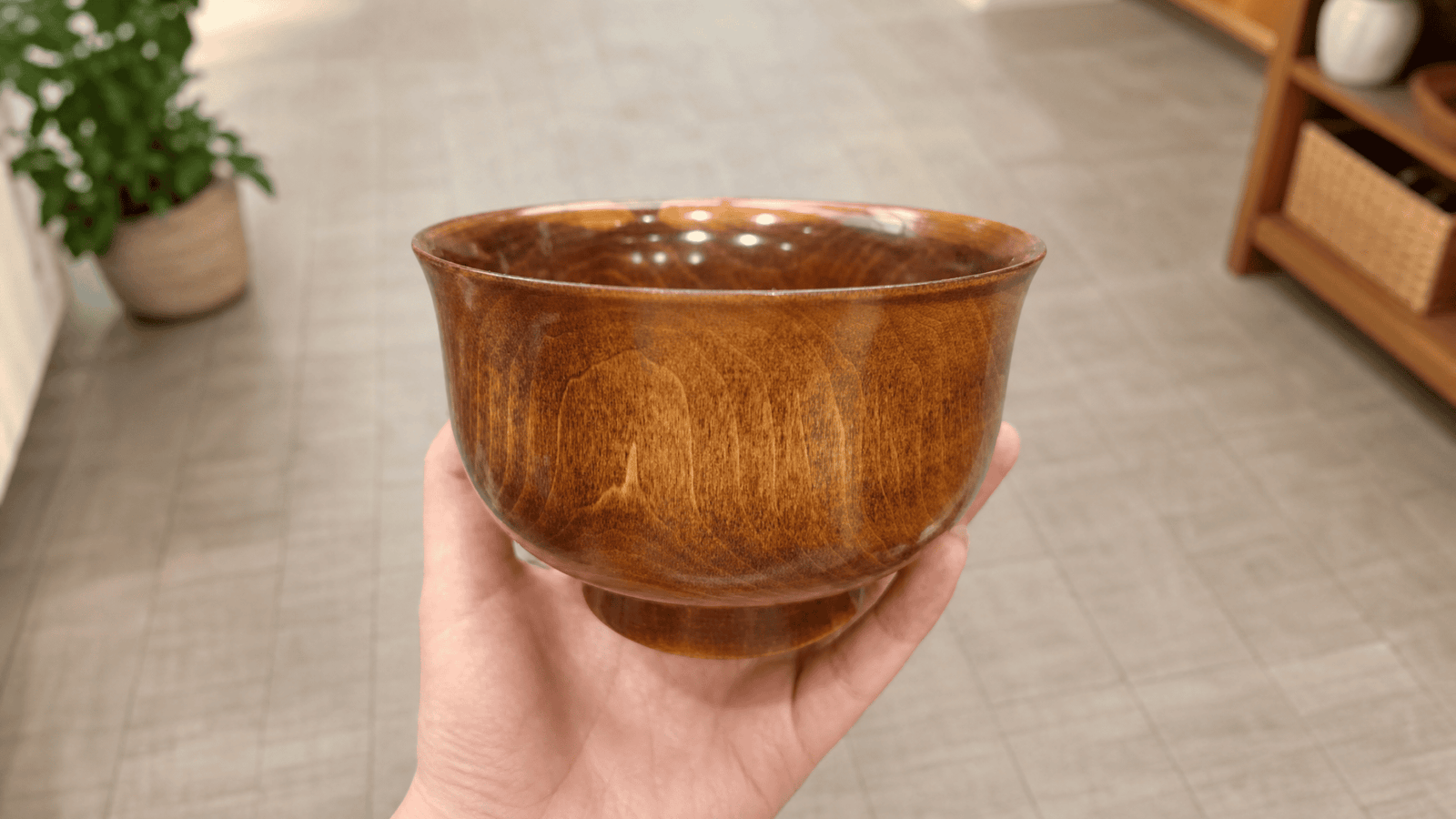
The confusion around lacquerware and food safety usually begins with the raw material.
Natural lacquer, or urushi, contains urushiol, an allergenic compound responsible for the characteristic skin reaction caused by contact with uncured lacquer. Related compounds are also responsible for reactions to poison ivy and poison oak.
During curing, urushiol undergoes oxidative polymerisation and becomes part of the cured lacquer film. The cured material behaves very differently from the raw sap. Research on oriental lacquer describes curing as a process involving laccase and oxidative polymerisation. (J-STAGE)
But that does not mean that every object sold as “lacquerware” is automatically food safe.
Raw lacquer and cured lacquer are different
Raw lacquer should be treated as an allergenic material.
People working with uncured lacquer can develop significant contact dermatitis, and sensitised individuals are advised to avoid direct exposure to the raw material. Good workshop practice includes protective clothing, gloves and prompt washing after exposure. (J-STAGE)
Once properly cured, natural lacquer forms a stable, durable film very different from the liquid sap.
This distinction is important:
The fact that raw lacquer can irritate the skin does not mean that a properly cured lacquer surface has the same properties.
At the same time, “fully cured” is only one part of the question. A food vessel also needs to have been made with appropriate materials and intended for food contact.
Does traditional lacquerware have a history of food use?
Yes.
Lacquer has a very long history as a material for bowls, cups, trays and serving vessels in East Asia. Traditional lacquerware was used for both everyday and ceremonial purposes.
That historical record tells us that lacquerware can function as tableware. It does not, however, provide a blanket safety guarantee for every modern object.
A modern piece may contain natural lacquer, synthetic coatings, pigments, metal decoration, adhesives or other materials. Food-contact safety therefore depends on the finished object and its intended conditions of use.
Modern food-contact regulations similarly assess the substances that may migrate from an article into food and the specific conditions under which the article will be used. (FDA)
What about someone who is sensitive to poison ivy?
If you are highly sensitive to poison ivy, poison oak or raw lacquer, it is sensible to be cautious around uncured or incompletely cured lacquer.
But an allergy to poison ivy does not by itself mean that a properly cured lacquerware bowl is unsafe to use.
The more important question is whether the individual piece is genuinely finished and intended for food contact.
If a newly made object has a strong raw-lacquer smell, a tacky surface or unclear curing instructions, do not use it for food until the maker confirms that curing is complete.
Hot food and hot drinks
Traditional lacquerware has long been used for food and drink, including warm foods and beverages.
For modern pieces, however, avoid assuming that every lacquered vessel can tolerate every temperature.
The safest general rule is:
- Use lacquerware only within the temperature range recommended by the maker.
- Avoid prolonged or intense heat.
- Do not place lacquerware in an oven or directly on a stovetop.
- Do not microwave lacquerware unless the maker explicitly states that the complete object is microwave-safe.
- Avoid sudden and extreme temperature changes.
The reason is not simply the lacquer surface. The underlying wood, bamboo, cloth or other core may respond differently to heat, and movement between the core and surface can eventually cause cracking or lifting.
What actually damages lacquerware?
For ordinary household use, the biggest risks are usually heat, prolonged soaking, harsh cleaning and abrasion.
1. Dishwashers
Do not put traditional lacquerware in a dishwasher unless the manufacturer specifically says that the complete piece is dishwasher-safe.
High temperatures, prolonged water exposure, detergents and drying cycles can damage the lacquer and the underlying structure.
2. Soaking
Do not leave lacquerware submerged in water overnight.
Water can enter joints, cracks or damaged areas and affect the relationship between the lacquer surface and the core.
3. Excessive heat and rapid climate changes
Keep lacquerware away from radiators, heating vents, hotplates and prolonged direct sunlight.
Very dry heat, excessive moisture and rapid changes in temperature or humidity can contribute to cracking, lifting or other deterioration.
4. Abrasives
Avoid scouring pads, abrasive powders and rough cleaning tools.
A lacquer surface may look hard, but scratches and worn areas can be permanent.
How should lacquerware be washed?
For a lacquerware piece that is specifically intended for food use:
- Wash by hand with lukewarm water.
- Use a soft cloth or sponge.
- If necessary, use a small amount of mild dish soap.
- Rinse promptly rather than soaking.
- Dry with a soft cloth.
- Do not use abrasive cleaners, bleach or harsh chemicals.
Do not assume that oiling, waxing or household furniture polish will improve a traditional lacquer surface. Such products may leave residues or alter the appearance.
What about gold, silver and mother-of-pearl decoration?
Decorated lacquerware needs additional care.
Gold-painted designs, silver decoration, mother-of-pearl, shell and other inlays can sit close to the surface and may be more vulnerable to abrasion or aggressive cleaning than the surrounding lacquer.
For a highly decorated piece:
- Wash gently by hand.
- Do not scrub the decorated areas.
- Avoid abrasive cleaners.
- Do not use the piece for cutting or scraping food.
- Follow the maker’s instructions about whether the object is intended for food service or display.
If a piece was made primarily as an art object, collector’s item or display vessel, it is better to treat it as decorative rather than assume it is suitable for food.
What should you check before using a new piece?
Before putting food into a newly purchased lacquerware bowl or cup, ask three simple questions:
1. Is it made with natural lacquer, synthetic lacquer, or another coating?
2. Was the piece specifically made for food contact?
3. Has the maker confirmed that the lacquer and all decorative materials are fully cured and suitable for the intended use?
If the answer to these questions is unclear, use the piece for display rather than food.
This is especially important for handmade pieces sold primarily as decorative crafts. A beautiful lacquer bowl is not automatically a food vessel simply because it has a traditional lacquer finish.
The practical answer
Traditional natural-lacquer tableware has a long history, and a properly made, fully cured lacquer surface can be suitable for food use.
But “lacquerware” is not a food-safety certification.
For a modern piece, what matters is the complete object: the type of lacquer, pigments and decoration, the underlying material, the curing process, and whether the maker intended it for food contact.
When those things are known and the piece is properly cared for, lacquerware can be both beautiful and practical.
When they are unknown, the safest rule is simple:
If it was made as tableware, use it as tableware. If it was made as art, treat it as art.