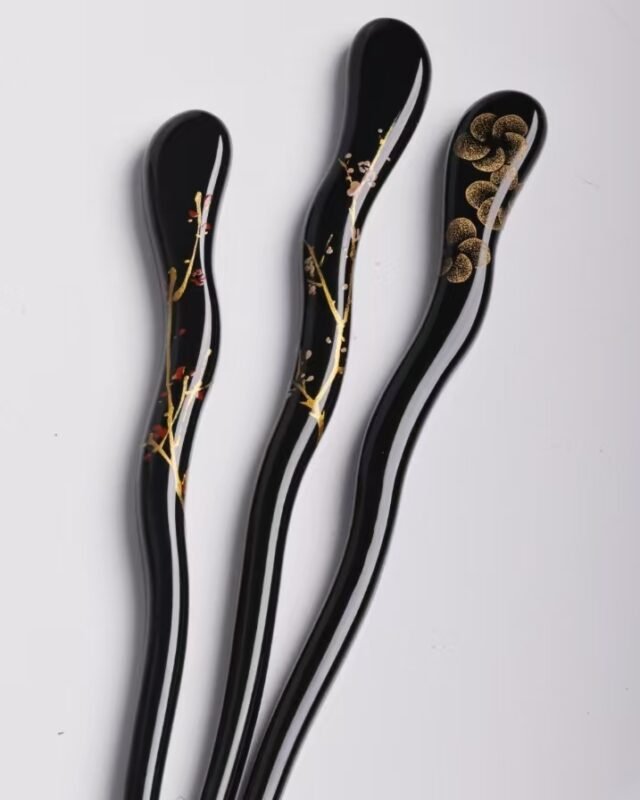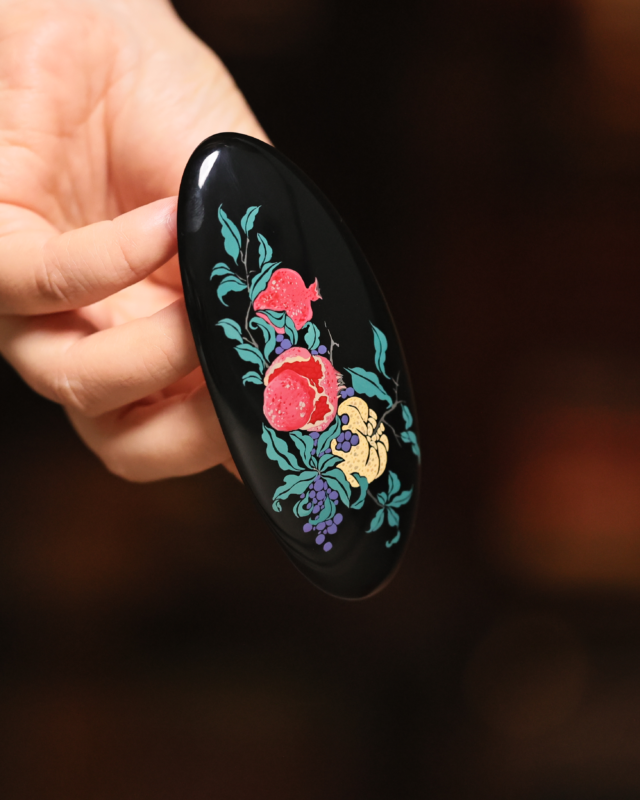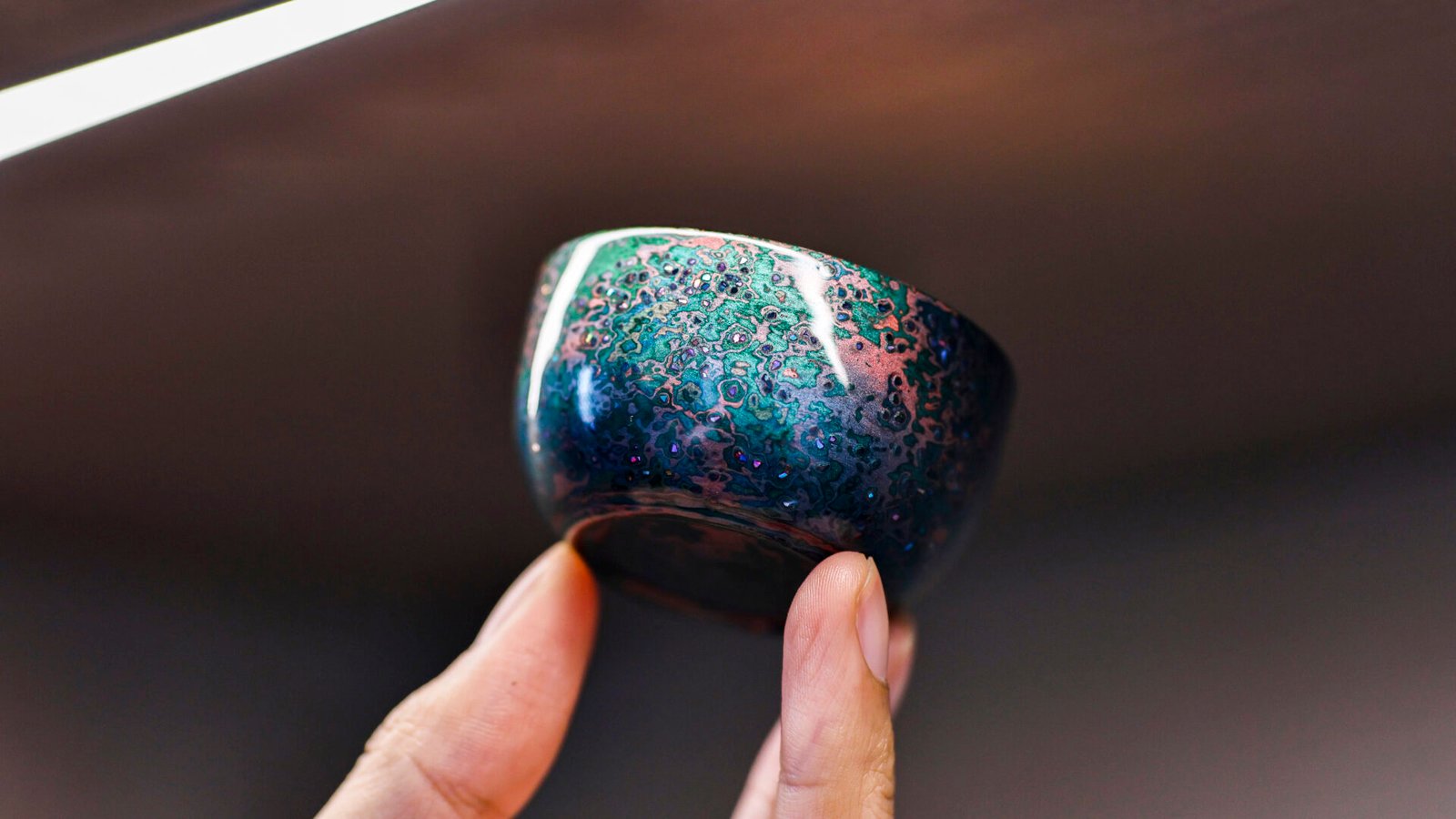
Chinese lacquerware refers to objects made or decorated using traditional lacquer techniques. Natural lacquer, known as qi (漆) or dàqī (大漆), is collected from the lacquer tree, Toxicodendron vernicifluum. It can be applied over wood, bamboo, cloth, paper, leather, metal and other prepared cores.
The process is slow. A layer is applied, allowed to cure under suitable conditions, then polished or prepared for the next stage. Some highly built-up lacquerwares may contain dozens or even hundreds of layers.
The result is not simply a painted surface. It is a material surface gradually constructed through repeated cycles of coating, curing, polishing and finishing.
What lacquer actually is
Raw lacquer is a milky sap collected from cuts made in the bark of the lacquer tree. After filtering and processing, it can be used in its natural form or mixed with colourants and other materials for different techniques.
Traditional lacquer can produce deep black, red, brown and other colours. Cinnabar, carbon-based pigments and other natural colourants have historically been used in lacquer decoration.
Once properly cured, natural lacquer forms a hard, glossy and durable surface with good resistance to moisture and everyday wear.
Raw lacquer itself is a different matter. It contains urushiol and can cause significant skin irritation or allergic reactions. This is one reason lacquer workers traditionally need to handle uncured lacquer with care. Once a lacquer surface has fully cured, it does not behave like the raw sap.
Why lacquer needs a humid environment
This is one of the most surprising things about traditional lacquer: natural lacquer cures rather than simply drying, and humidity plays an important role in the process.
The curing process involves oxidation and the enzyme laccase. In a very dry environment, curing can become slow or uneven. Traditional workshops therefore use enclosed, controlled spaces with suitable warmth and humidity.
The exact conditions vary according to the lacquer, season and technique, so there is no single humidity setting that applies to every workshop.
Each layer must cure sufficiently before the next stage. Between applications, artisans may polish, scrape or level the surface before adding another layer.
This is one reason traditional lacquerware takes time. A simple object may require weeks of work, while highly built-up, carved or elaborately decorated pieces can take months or longer.
What sits underneath
The core, or taigu (胎骨), is chosen according to the shape, strength and weight required.
- Wood — one of the most common cores, used for bowls, trays, boxes, furniture and many other objects.
- Bamboo — used in woven, laminated or other lightweight forms.
- Cloth — used in techniques such as Fuzhou bodiless lacquerware, where layers of cloth and lacquer are formed over a mould and the original mould is later removed. The resulting hollow body can be remarkably light and strong. Fuzhou bodiless lacquerware is a nationally recognised intangible cultural heritage tradition.
- Paper, leather and other materials — used in different regional traditions and for particular shapes or structural requirements.
- Metal and ceramic — sometimes used when a rigid or specialised base is required.
The core matters because it changes the character of the finished object. A hollow bodiless lacquer vessel can feel surprisingly light, while a wood-cored bowl has the weight and solidity of its wooden structure.
The main decorative techniques
Chinese lacquerware encompasses a very large range of techniques. Some of the most recognisable include:
- Carved lacquer (雕漆) — many layers of lacquer are built up to a substantial thickness before the surface is carved to create relief. Tihong (剔红), or carved red lacquer, is one of the best-known forms. Palace Museum examples describe layers ranging from dozens to more than one hundred before carving.
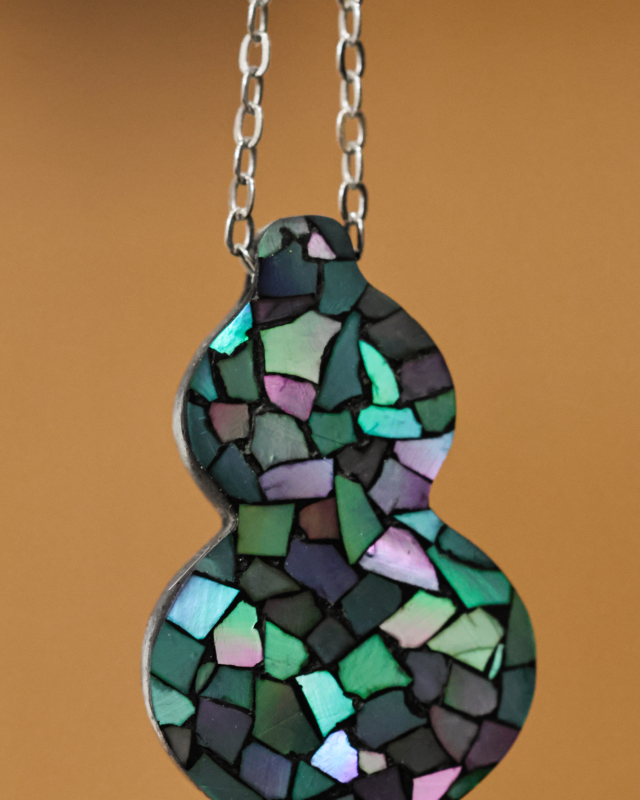
- Mother-of-pearl and shell inlay (螺钿) — pieces or flakes of shell are set into the lacquer surface and then polished, sometimes appearing almost flush with the surrounding lacquer.
- Gold decoration (描金 / 泥金 and related techniques) — gold powder, gold leaf or other gold decoration is applied to a lacquer ground in different traditional methods.
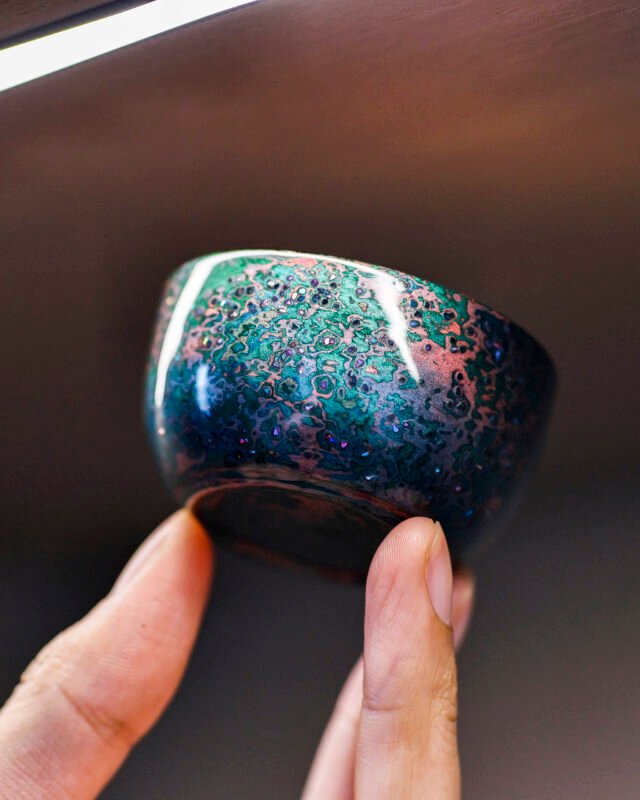
- Xipi lacquer (犀皮) — contrasting layers of coloured lacquer are built up and worked to produce flowing, cloud-like, rippling or patterned surfaces.
- Lacquer painting and inlay — painted decoration, metal, shell, stone, eggshell and other materials can be combined with lacquer to create highly complex surfaces.
There is no single “Chinese lacquerware style”. Techniques developed differently in places such as Beijing, Shanxi, Yangzhou, Fuzhou, Chengdu and other lacquer-producing regions.
How old is the tradition?
Chinese lacquerware has an exceptionally long history.
Archaeological finds from the Hemudu culture in present-day Zhejiang include red-lacquered wooden objects dating back more than 7,000 years, making them among the earliest known lacquerwares in China.
By the Warring States, Qin and Han periods, lacquer production had developed into a sophisticated craft with a wide range of forms, colours and decorative techniques. The Han dynasty in particular was a major period for lacquer production, with lacquerware used in both everyday and elite contexts.
Later periods brought further innovations. By the Ming dynasty, Chinese craftsmen had developed a remarkably broad vocabulary of lacquer techniques, while specialist traditions continued to evolve in different regions.
Many traditional principles remain recognisable today, even though modern workshops may use different tools, abrasives and environmental controls.
The basic rhythm remains familiar:
prepare the core → apply lacquer → cure → polish → decorate → repeat.
How to tell traditional lacquerware from an imitation
This is harder than it looks.
A glossy object described as “lacquer” may be made using natural lacquer, synthetic coatings, or a combination of traditional and modern materials. No single visual or tactile test can reliably authenticate a piece.
Instead, look for several clues together:
- Surface depth — layered natural lacquer can produce a deep visual effect, especially when translucent layers or polished surfaces are involved.
- Construction — inspect the underside, rim, interior and edges to understand what the object is made from.
- Decoration — carved lacquer, shell inlay and other traditional techniques have distinctive construction methods that can often be seen under close inspection.
- Consistency of the object — the relationship between the surface, core, weight and construction can provide useful clues.
- Provenance — the maker, workshop, region, age, documentation and production method are often more reliable than appearance alone.
For valuable or supposedly antique lacquerware, professional examination is much safer than trying to test the material yourself.
Living with Chinese lacquerware
Traditional lacquerware can be durable, but durability does not mean indestructibility.
Many lacquerwares were made for practical use, while others were created for ceremonial, decorative or collectible purposes.
For an everyday lacquer object:
- Wipe it with a soft, slightly damp cloth.
- Dry it afterwards rather than leaving moisture on the surface.
- Keep it away from prolonged direct sunlight.
- Avoid radiators, heating vents and sudden temperature changes.
- Do not put it in a dishwasher.
- Do not leave it soaking in water.
- Avoid harsh chemicals and abrasive cleaners.
Older or highly decorated pieces deserve greater care. If a piece has carved lacquer, fragile inlay, cracking, lifting decoration or historical value, professional conservation advice is preferable to home repair.
With careful use, traditional lacquer can develop a softer and deeper visual character over time. The changes that come with age are part of what makes old lacquerware so compelling.
The appeal of Chinese lacquer lies not simply in its shine, but in the patience built into the surface: layer after layer, each one prepared for the next, until wood, cloth or another humble core becomes something far more enduring.